
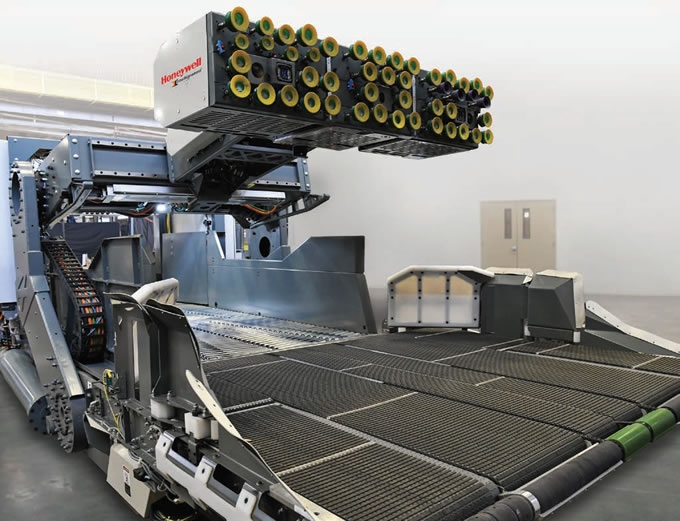
This Honeywell Intelligrated white paper examines the specific labor, operational and technological challenges on the loading docks of distribution centers (DCs), and introduces a new solution to help deliver the performance modern supply chains require.
 Solve Loading Dock Challenges With Robotic Unloading
Whitepaper from | Honeywell Intelligrated
Breakthrough Technology Fully Automates Unloading While Matching Human Performance
 The receiving dock is ground zero of the supply chain labor crisis. Loading and unloading freight from trailers, trucks and shipping containers are arduous, repetitive tasks plagued by high turnover. Even with regularly available staff, manually unloading freight and the constant lifting and twisting results in fatigue and inconsistent, declining productivity.
These challenges on the loading dock are characteristic of greater pressures facing supply chains from the rise of e-commerce. Often referred to as the “Amazon Effect,” businesses must lower logistics costs while keeping up with stricter service level agreements (SLAs). This new model forces supply chains to transform, modernize processes, and enlist innovative technologies to remain competitive.
This white paper examines the specific labor, operational and technological challenges on the loading docks of distribution centers (DCs), and introduces a new solution to help deliver the performance modern supply chains require.
Download the Entire White Paper Free Here
Labor Challenges Plague the DC 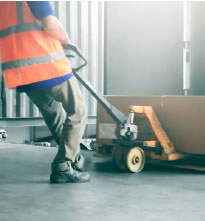
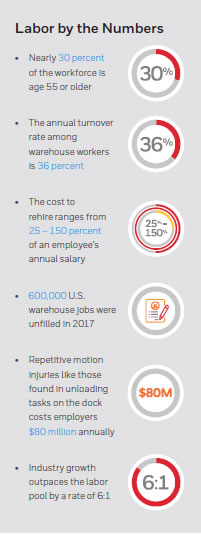
The labor challenge facing DCs is twofold, rooted in overall trends of availability and turnover, and the nature of manual unloading tasks. The U.S. Bureau of Labor Statistics reports high growth in logistics jobs during the 2010s, but finding qualified labor to fill those jobs is proving to be a persistent, growing challenge. Available job candidates often come with extra complications that can compromise hiring standards and have high wage expectations.

The arduous, repetitive nature of loading and unloading tasks in the DC exacerbates these challenges, and sows seeds for high turnover. As labor becomes increasingly scarce and the market for a limited workforce becomes more competitive, incentives and wage wars drive up costs and provide an extra challenge for sound operations. Freight containers and docks are rarely temperature controlled and typically amplify outside conditions, making the unloading task more uncomfortable – sweltering hot in the summer and bitterly cold in winter. Therefore, employees spend most of their time twisting and lifting in extreme temperatures and encounter collapsing freight. This leads to cuts, scrapes, bruises and other repetitive motion injuries – the type of injuries that result in the most prolonged work absences annually.
Download the Entire White Paper Free Here
The content & opinions in this article are the author’s and do not necessarily represent the views of RoboticsTomorrow
Featured Product